Spanish present tense irregular verbs: pienso, tengo and hago
Most irregular verbs in the Spanish present tense fall into a few simple groups. Some change a vowel, like pienso and vuelvo. Some change only the yo form, like hago. A small number, like ser and ir, you just learn by heart.
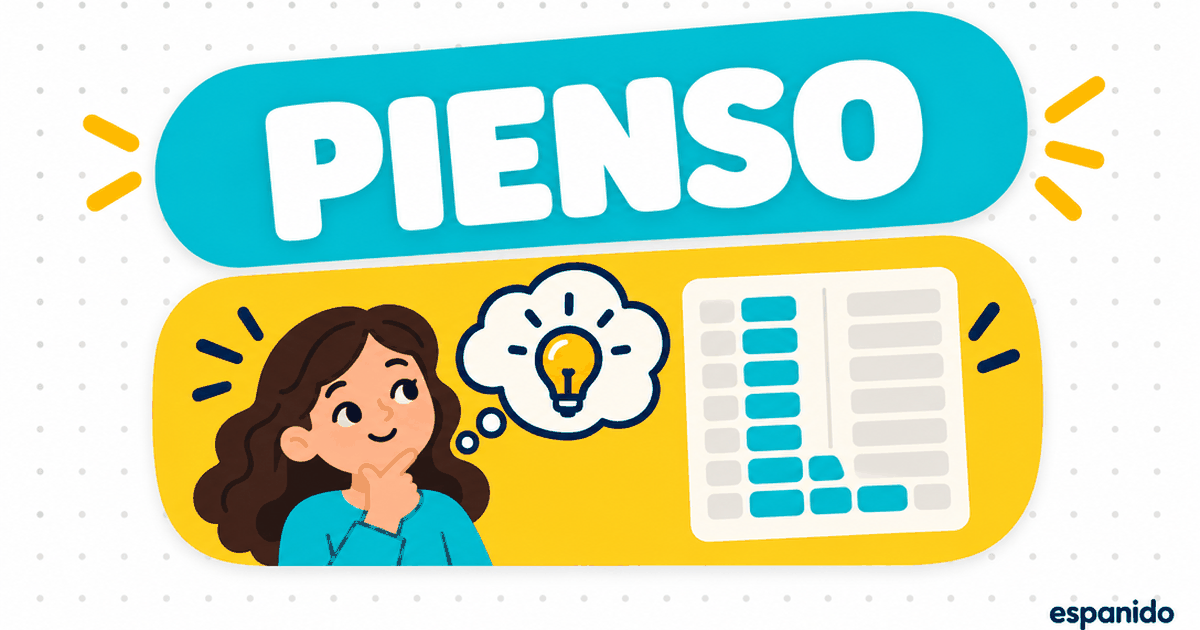
Here are all the groups in one table. The colored letters show what changes.
| What happens | Example |
|---|---|
| e becomes ie | pienso, piensas (but pensamos) |
| o becomes ue | vuelvo, vuelves (but volvemos) |
| e becomes i | pido, pides (but pedimos) |
| Only the yo form is different | hago (but haces, hace) |
| The yo form is different and a vowel changes | tengo, tienes (but tenemos) |
| No pattern, learn by heart | voy, vas, va |
In the first three groups, nosotros and vosotros don't change. In the first five groups, the endings are the normal ones. Sé and doy are the main exceptions. If you need a reminder, see our guide to regular -ar, -er and -ir verbs.
Vowel changes: pienso, vuelvo, pido
These verbs change a vowel inside the word. Nosotros and vosotros don't change, so those two forms look regular.
| Person | pensar | volver | pedir |
|---|---|---|---|
| yo | pienso | vuelvo | pido |
| tú | piensas | vuelves | pides |
| él / ella / usted | piensa | vuelve | pide |
| nosotros | pensamos | volvemos | pedimos |
| vosotros | pensáis | volvéis | pedís |
| ellos / ellas / ustedes | piensan | vuelven | piden |
You may see these called stem-changing verbs or boot verbs. If you write the forms in two columns, singular on the left and plural on the right, the forms that change make the shape of a boot.
Other common verbs in each group:
- e → ie: querer → quiero, empezar → empiezo, entender → entiendo, cerrar → cierro, preferir → prefiero
- o → ue: poder → puedo, dormir → duermo, encontrar → encuentro, recordar → recuerdo, costar → cuesta
- e → i (only -ir verbs): servir → sirvo, repetir → repito, seguir → sigo
Examples:
- Quiero un café, por favor. (I want a coffee, please)
- ¿A qué hora empieza la película? (What time does the movie start?)
- No puedo salir hoy. (I can't go out today)
- Mi hijo duerme poco. (My son sleeps very little)
- Siempre pedimos pizza. (We always order pizza)
Watch out: jugar is the only verb that changes u → ue: juego, juegas, juega, jugamos, jugáis, juegan.
Not every verb with an e or an o changes. Beber is bebo, aprender is aprendo and tomar is tomo. You can't tell from the spelling, so learn the changing verbs as you meet them.
Only the yo form: hago, conozco, sé
These verbs are strange only in the yo form. All the other forms are regular.
| Person | hacer | conocer | saber |
|---|---|---|---|
| yo | hago | conozco | sé |
| tú | haces | conoces | sabes |
| él / ella / usted | hace | conoce | sabe |
| nosotros | hacemos | conocemos | sabemos |
| vosotros | hacéis | conocéis | sabéis |
| ellos / ellas / ustedes | hacen | conocen | saben |
Other verbs like this:
- yo form with g: poner → pongo, salir → salgo, traer → traigo, caer → caigo
- yo form with zc: parecer → parezco, conducir → conduzco, traducir → traduzco
- Other yo forms: ver → veo, dar → doy
Examples:
- Hago la cena los domingos. (I make dinner on Sundays)
- Salgo de casa a las ocho. (I leave home at eight)
- No conozco a tu hermana. (I don't know your sister)
- No sé dónde está. (I don't know where it is)
Yo form and a vowel: tengo, vengo, digo
These three very common verbs do both. The yo form has a g, and the tú, él and ellos forms change a vowel.
| Person | tener | venir | decir |
|---|---|---|---|
| yo | tengo | vengo | digo |
| tú | tienes | vienes | dices |
| él / ella / usted | tiene | viene | dice |
| nosotros | tenemos | venimos | decimos |
| vosotros | tenéis | venís | decís |
| ellos / ellas / ustedes | tienen | vienen | dicen |
Examples:
- Tengo dos hermanos. (I have two brothers)
- ¿Vienes con nosotros? (Are you coming with us?)
- Ellos no dicen nada. (They don't say anything)
Oír is also unusual. It has a g in the yo form and a y in the tú, él and ellos forms: oigo, oyes, oye, oímos, oís, oyen.
Tener appears in many everyday phrases. See our list of expressions with tener to learn them.
Very irregular: soy, estoy, voy
Ser and ir don't fit any of the groups above. Estar is close to regular, but look at the yo form and the accents.
| Person | ser | estar | ir |
|---|---|---|---|
| yo | soy | estoy | voy |
| tú | eres | estás | vas |
| él / ella / usted | es | está | va |
| nosotros | somos | estamos | vamos |
| vosotros | sois | estáis | vais |
| ellos / ellas / ustedes | son | están | van |
Examples:
- Soy profesora. (I'm a teacher)
- Estoy en casa. (I'm at home)
- Vamos al cine. (We're going to the movies)
To choose the right verb for “to be,” read when to use ser and estar. For more on ir, see our ir conjugation guide.
Common mistakes
| Wrong | Right |
|---|---|
| piensamos, duermimos | pensamos, dormimos |
| piedo, sierves | pido, sirves |
| jugo al tenis | juego al tenis |
| yo tieno, yo veno | yo tengo, yo vengo |
| yo haco, yo poneo | yo hago, yo pongo |
| yo conoco, yo sabo | yo conozco, yo sé |
| él dece, tú deces | él dice, tú dices |
| yo vo, yo so | yo voy, yo soy |
Practice
Put the verb in the present tense.
- Yo ___ que es una buena idea. (pensar)
- ¿A qué hora ___ tú a casa? (volver)
- Nosotros ___ ocho horas cada noche. (dormir)
- Ella siempre ___ café. (pedir)
- Yo ___ la cama por la mañana. (hacer)
- Yo no ___ a tus padres. (conocer)
- Mis amigos ___ mañana. (venir)
- Yo ___ dos gatos. (tener)
- Mi hermana y yo ___ de Madrid. (ser)
- Find two mistakes: Yo jugo al fútbol y salo a las cinco.
Show answersHide answers
- pienso: e → ie.
- vuelves: o → ue.
- dormimos: nosotros doesn't change.
- pide: e → i.
- hago: only the yo form is irregular.
- conozco: yo form with zc.
- vienen: e → ie in the ellos form.
- tengo: yo form with g.
- somos: mi hermana y yo means nosotros.
- Yo juego al fútbol y salgo a las cinco. Jugar changes u → ue, and jugo means “juice.” Salir has a g in the yo form.
Quick questions
Is pedir a stem-changing verb?
Yes. The e changes to i in every form except nosotros and vosotros: pido, pides, pide, pedimos, pedís, piden.
Why don't nosotros and vosotros change?
It depends on where you stress the word. In pienso, the stress is on the part that changes. In pensamos, the stress moves to the ending, so the vowel stays e.
Do the vowel-change verbs also change in the past tense?
Most don't. Pensar and volver are regular: pensé, volví. But -ir verbs like pedir and dormir change in the él and ellos forms. See Spanish preterite spelling changes. Some verbs in this guide, like tener, hacer and ir, have very different past forms: tuve, hice, fui.
What next?
Read the short Spanish present tense rule, then practice with the Spanish present tense exercises on Espanido.
Full tables for every tense: pensar, volver, pedir, jugar, hacer, conocer, saber, tener, venir, decir, ser, estar, ir.

