Spanish expressions with tener you’ll actually use
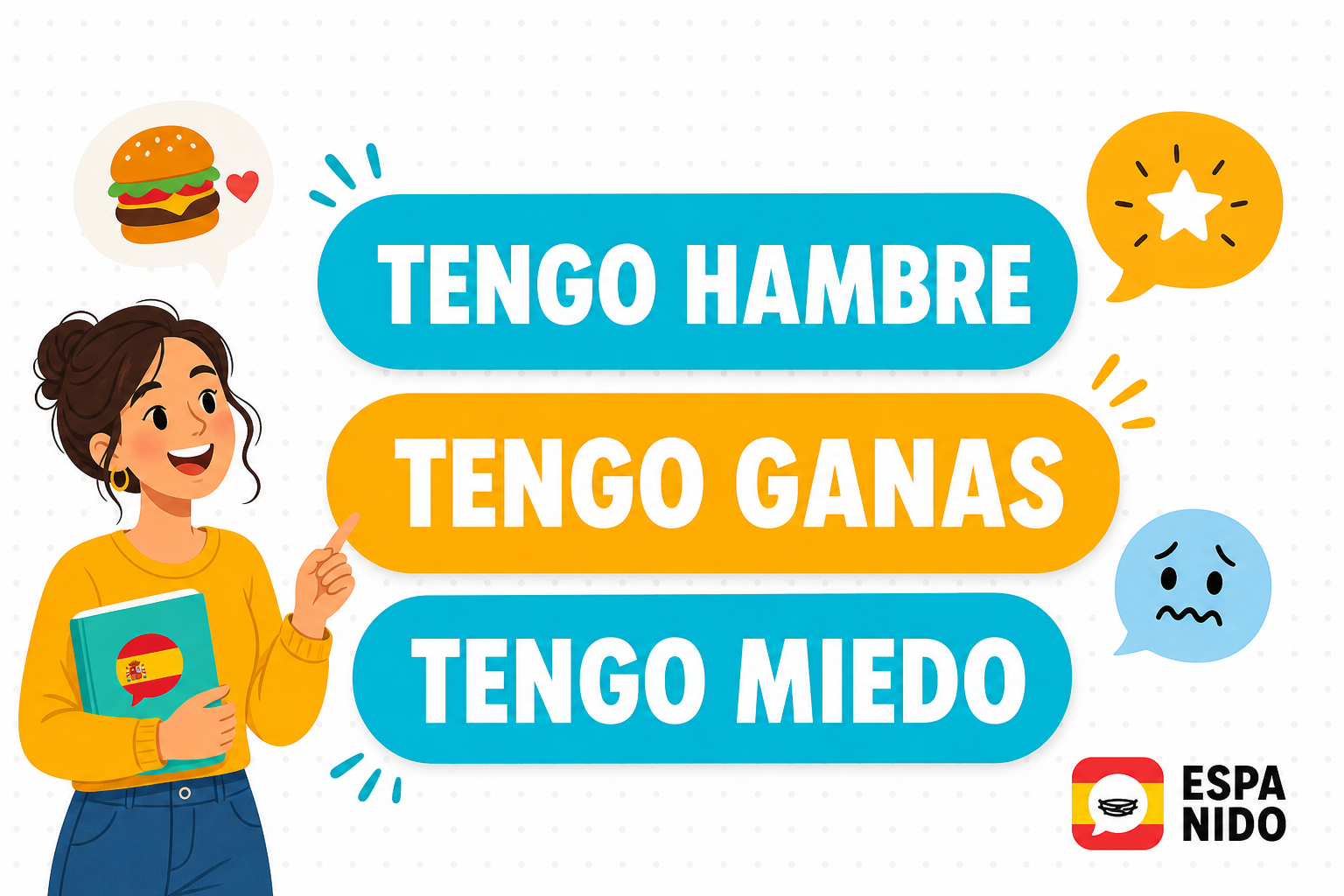
You know that tener means “to have,” but Spanish uses it in many places where English uses “to be,” “to feel,” or another verb. These common patterns let you talk about hunger, plans, fear, age, sleep, and daily needs.
Want to practice right away? Start the expresiones idiomaticas con tener exercise.
The essential idea behind tener expressions
Consider these everyday sentences:
- Tengo hambre. — I’m hungry.
- Tenemos sueño. — We’re sleepy.
- Ana tiene miedo. — Ana is afraid.
- Tienes razón. — You’re right.
Spanish treats these ideas as things you “have.” A word-for-word translation may sound strange in English, but the Spanish pattern is simple: use the correct form of tener followed by the expression.
In the present tense, the forms are:
| Person | Form | Example |
|---|---|---|
| yo | tengo | Tengo sed. — I’m thirsty. |
| tú | tienes | Tienes suerte. — You’re lucky. |
| él, ella, usted | tiene | Ella tiene frío. — She’s cold. |
| nosotros/as | tenemos | Tenemos prisa. — We’re in a hurry. |
| vosotros/as | tenéis | Tenéis razón. — You’re right. |
| ellos, ellas, ustedes | tienen | Tienen sueño. — They’re sleepy. |
Notice the irregular first-person form tengo. The other forms use the changing stem tien-, except for tenemos and tenéis.
If you want to review these forms, use Espanido’s tener conjugation exercise before working on the full expressions.
Tener hambre, tener sed, and tener sueño
Three common expressions describe basic physical needs:
- tener hambre: to be hungry
- tener sed: to be thirsty
- tener sueño: to be sleepy
Imagine that you’ve been walking around Madrid all afternoon. You might say:
Tengo hambre y sed. Vamos a buscar un café. — I’m hungry and thirsty. Let’s find a café.
Later that evening, you could say:
Ya tengo sueño. Me voy a casa. — I’m sleepy now. I’m going home.
English speakers may try to use estar and say estoy hambre. That doesn’t work. Hunger, thirst, and sleepiness use tener, not estar.
Another common mistake is adding an article:
- Correct: Tengo hambre.
- Incorrect: Tengo una hambre.
Normally, you don’t put un, una, el, or la before hambre, sed, or sueño. You can, however, add words that show intensity:
- Tengo mucha hambre. — I’m very hungry.
- ¿Tienes mucha sed? — Are you very thirsty?
- Los niños tienen muchísimo sueño. — The children are extremely sleepy.
Tener frío and tener calor
Spanish also uses tener to say that a person feels cold or hot:
- Tengo frío. — I’m cold.
- ¿Tienes calor? — Are you hot?
- Tenemos mucho frío aquí. — We’re very cold here.
These phrases describe how someone feels. To describe the weather or the temperature of an object, you need a different structure.
Compare:
- Tengo calor. — I feel hot.
- Hace calor. — The weather is hot.
- El café está caliente. — The coffee is hot.
This distinction can prevent a misunderstanding. Estoy caliente can have meanings you may not intend when you simply want to say that the room feels hot. Use Tengo calor in that situation.
Tener ganas de: feeling like doing something
Use tener ganas de when you feel like doing something or are in the mood for it. Place an infinitive, the basic form of a verb, after de:
- Tengo ganas de bailar. — I feel like dancing.
- ¿Tienes ganas de salir? — Do you feel like going out?
- No tenemos ganas de cocinar. — We don’t feel like cooking.
A noun can also follow de:
- Tengo ganas de café. — I feel like having coffee.
- Tenemos ganas de vacaciones. — We’re eager for a vacation.
Don’t leave out de. The complete pattern is tener ganas de + noun or infinitive.
The difference between tener ganas and querer
Tener ganas de and querer can both express a desire, but they don’t always feel the same.
Querer means “to want” and can describe a clear wish, choice, or goal:
Quiero aprender español. — I want to learn Spanish.
Tener ganas de is closer to “to feel like” or “to be in the mood to.” It often describes your feeling at that moment:
Hoy tengo ganas de practicar español. — Today I feel like practicing Spanish.
Compare these two sentences:
- Quiero ir al gimnasio tres veces por semana. — I want to go to the gym three times a week.
- No tengo ganas de ir al gimnasio hoy. — I don’t feel like going to the gym today.
Both statements can be true. You can want a long-term result while not feeling like taking action today.
Tener miedo: talking about fear
Tener miedo means “to be afraid.” It can stand alone when the source of the fear is already clear:
No quiero entrar. Tengo miedo. — I don’t want to go in. I’m afraid.
To name the thing that causes fear, you’ll often hear tener miedo a or tener miedo de:
- Tengo miedo a las arañas. — I’m afraid of spiders.
- El niño tiene miedo de la oscuridad. — The child is afraid of the dark.
- Tenemos miedo de perdernos. — We’re afraid of getting lost.
Usage can vary by region, but de is especially common before an infinitive:
Tengo miedo de hablar en público. — I’m afraid of speaking in public.
To say that you aren’t afraid, put no before tener:
No tengo miedo de cometer errores. — I’m not afraid of making mistakes.
Tener que: saying what you have to do
Use tener que + infinitive for an obligation or something necessary:
- Tengo que trabajar. — I have to work.
- Tenemos que comprar pan. — We have to buy bread.
- ¿Tienes que salir ahora? — Do you have to leave now?
The word que is required. Don’t say tengo trabajar.
Tener que changes with the person who has the obligation, while the second verb stays in its infinitive form:
- Ella tiene que estudiar. — She has to study.
- Ellos tienen que esperar. — They have to wait.
This pattern is different from tener ganas de. Compare the two in one sentence:
Tengo que limpiar la cocina, pero no tengo ganas de hacerlo. — I have to clean the kitchen, but I don’t feel like doing it.
The first phrase expresses necessity. The second expresses your mood.
More everyday phrases with tener
The same pattern appears in several other expressions.
| Expression | Meaning | Example |
|---|---|---|
| tener prisa | to be in a hurry | Tengo prisa; el tren sale en diez minutos. — I’m in a hurry; the train leaves in ten minutes. |
| tener razón | to be right | Creo que tienes razón. — I think you’re right. |
| tener suerte | to be lucky | Tenemos suerte con el tiempo. — We’re lucky with the weather. |
| tener cuidado | to be careful | Ten cuidado al cruzar. — Be careful when crossing. |
| tener paciencia | to be patient | Hay que tener paciencia. — You have to be patient. |
| tener tiempo | to have time | No tengo tiempo esta mañana. — I don’t have time this morning. |
| tener interés en | to be interested in | Tiene interés en la historia. — She is interested in history. |
| tener éxito | to be successful | El proyecto tuvo éxito. — The project was successful. |
Tener cuidado often appears as a command. Spanish uses ten for an informal command to one person:
¡Ten cuidado! — Be careful!
For more than one person in much of Latin America, you can say:
¡Tengan cuidado! — Be careful!
How to say your age with tener
Spanish uses tener rather than “to be” when talking about age:
- Tengo veinte años. — I am twenty years old.
- Mi hermana tiene treinta años. — My sister is thirty years old.
- ¿Cuántos años tienes? — How old are you?
A direct translation such as soy veinte años is incorrect. Think of the Spanish structure as “I have twenty years,” even though you should translate it naturally as “I am twenty years old.”
You normally include años after the number. It may be left out in casual conversation when the meaning is obvious, but learners should use the full pattern.
A mini conversation using tener
Several expressions can appear in one ordinary conversation:
A: ¿Tienes hambre?
Are you hungry?
B: Sí, y también tengo mucha sed.
Yes, and I’m also very thirsty.
A: Podemos ir al restaurante nuevo.
We can go to the new restaurant.
B: Tengo ganas de probarlo, pero tengo que terminar este trabajo primero.
I feel like trying it, but I have to finish this work first.
A: Está bien, pero date prisa. Tengo sueño.
All right, but hurry up. I’m sleepy.
This short scene covers physical needs, desire, obligation, and an everyday situation. It also gives each expression context instead of presenting it in an isolated list.
Common mistakes to avoid
Using estar instead of tener
Don’t copy the English structure when Spanish uses tener.
- Incorrect: Estoy hambre.
- Correct: Tengo hambre. — I’m hungry.
Forgetting a connecting word
Some expressions need que, de, or another preposition:
- tener que + infinitive: Tengo que estudiar.
- tener ganas de + infinitive: Tengo ganas de estudiar.
- tener miedo de + infinitive: Tengo miedo de preguntar.
These short words change the meaning, so learn the whole expression as one unit.
Matching tener to the wrong person
The form of tener must agree with the subject:
- Yo tengo frío. — I’m cold.
- Ella tiene frío. — She’s cold.
- Nosotros tenemos frío. — We’re cold.
Instead of memorizing only tener hambre, practice complete chunks such as tengo hambre, ¿tienes hambre?, and tenemos hambre.
Grouping tener expressions by purpose
Group the phrases by purpose rather than learning one long list:
- Physical needs: tener hambre, sed, sueño, frío, calor
- Feelings and wishes: tener miedo, ganas de
- Daily situations: tener prisa, tiempo, cuidado
- Opinions and results: tener razón, suerte, éxito
- Obligations: tener que + infinitive
Next, make one personal sentence with each group. Connecting each phrase to a situation in your own life can make the pattern easier to recall.
You can review the patterns in Espanido’s Spanish expressions with tener guide, then test yourself with the interactive tener expressions exercise. Try saying each completed sentence aloud as well as typing the answer.
Quick FAQ
Does tener always mean “to have”?
No. Its basic meaning is “to have,” but many common expressions translate with “to be” or another English verb. For example, tener sueño means “to be sleepy,” and tener razón means “to be right.”
How do you say “I am very hungry” in Spanish?
Say Tengo mucha hambre. The word hambre is a noun, so use mucha, not muy, directly before it.
What is the difference between tengo sueño and estoy cansado?
Tengo sueño means “I’m sleepy” and suggests that you want to sleep. Estoy cansado or estoy cansada means “I’m tired,” which can describe physical or mental tiredness without sleepiness.
Is it tener miedo a or tener miedo de?
Both forms are used. Tener miedo a is common before a noun, while tener miedo de is common before a noun or infinitive. You may hear regional differences, so focus first on recognizing both.
Can I say tener ganas without de?
Yes, when you don’t name the desired action or thing. For example, No tengo ganas means “I don’t feel like it.” If you add an action, use de: No tengo ganas de salir (“I don’t feel like going out”).
Start with the phrases you need today
You don’t need to memorize every expression at once. Begin with tengo hambre, tengo sueño, tengo ganas de, tengo miedo de, and tengo que because they fit many everyday situations.
Make five true sentences about your day, change the subject, and turn two of them into questions. This gives you practice with both the expressions and the different forms of tener.